Showing posts with label citizenship. Show all posts

Sunday, August 17, 2025

Trump shoots the messenger, though not on 5th avenue…and why he gets away with it

If Democrats would stop blaming voters’ bigotry and ignorance for their election losses and pay attention to the legitimate concerns behind the rise of Trump they might better understand why their approval rating is still significantly lower than his.

AI generated image.  Gemini refused to depict
Trump standing on 5th Avenue with a smoking gun.

The president may not have been standing in Fifth Avenue when he metaphorically shot his labor statistics messenger, but close enough.

There is widespread agreement that Trump’s firing of Erika McEntarfer, the commissioner of the Bureau of Labor Statistics, poses great danger to the future health of the economy. To quote one expert reaction:

If policymakers and the public can’t trust the data—or suspect the data are being manipulated—confidence collapses and reasonable economic decision-making becomes impossible. It’s like trying to drive a car blindfolded. This manufactured chaos will reduce business investment and consumer spending, making a recession—and soaring unemployment—far more likely in coming months.

Trump’s political instincts, however, are almost always better than the reasoned judgement of establishment thinkers like Heidi Shierholz, who wrote that paragraph for the Economic Policy Institute.

How can that be?

A day or so before the commissioner lost her job, journalist Jesse Singal (a liberal journalist) told an interviewer that his reporting on social science research has revealed a disturbing pattern of shoddy methods, ideological bias, groupthink, and outright corruption. Experts, he said, “have screwed up so badly so often”

The crisis in expert authority is a disaster in its own right—we should be able to trust the studies that are published—but one of the knock-on effects of it is it does fuel folks like Trump who take the burn-it-down-approach.

Singal spoke before the firing of Ms. McEntarfer, but he had no trouble coming up with an example of a Trump administrator burning something down: Robert F. Kennedy’s attack on expert vaccine consensus. As if on cue, a week after Singal’s interview, Kennedy announced a $500m cut to  mRNA vaccine research funding.

Singal’s findings turn liberals’ “believe science” lawn sign narrative on its head. In that story, scientists are the heroes. They give us a set of uncontested facts that make our lives better. Those who attack scientific consensus are the villains who are causing the crisis in expert authority, which undermines reasonable decision-making and leads to chaos.

Singal suggests a somewhat different story, in which failings of scientific expertise are at least partially responsible for the “crisis in expert authority.”

And the crisis extends beyond science to every kind of expert in government, education, the media—just about every institution and by extension, democracy itself.  In every case, there is at least some kernel of truth to the sense that experts and institutions have failed us.  And Democrats have become the party that defends the experts and institutions against Trump's attacks on them. 

Meanwhile, Trump has a plan for reviving the middle class that requires attacking those institutions and, in spite of his many blunders, his low approval rating is still significantly higher than the Democrats’.

Democrats could stop blaming voters’ bigotry and ignorance for their losses, acknowledge the failings of elite experts and institutions, and come up with a better plan to restore working class prosperity.

Or they can keep doing what they've been doing and wait for the anti-incumbency cycle to run it's course after Trump’s policies inevitably fail and voters decide they hate the Republican Party even more than they hate Democrats.

Then the party of experts will have a slim majority for a few years until their policies inevitable fail again. 

Notes

This recent Atlantic article offers a list of the ways that Trump is likely to fail. Note to self: read this again in a couple of years to see which of these predictions came true.

It’s Trump’s economy now. The latest financial numbers offer some warning signs (AP, Aug. 2).

Even if Trump manages to revive the manufacturing sector, it's not going to restore middle class prosperity.  Here's why. 

Jesse Singal’s book, “The Quick Fix” focuses on bad science in psychology. 

Here's an example of a left wing party that defeated a Trump-like opposition by admitting past mistakes.

Friday, July 4, 2025

How liberals should celebrate the Fourth

Fireworks at the Navy Yard in DC, 2024

Folks on the left are often accused of being less patriotic than conservatives.  There's something to this.  Every year, Gallup asks us questions about our feelings for the USA. This year, 92 percent of Republicans said they were extremely or very proud to be an American. Only 36 percent of Democrats feel that way. 

Trump has something to do with this, but the gap was still wide in the middle of the Biden administration, 52-36. And Republicans even had an 8-point edge in the Dems' most patriotic year of the Obama administration. The younger they get the less patriotic.  Gen Z Democrats were 42 percent less proud to be Americans than the oldest cohort of Dems over the last five years.

Why is this?  Many reasons, I'm sure, but here's one I've observed first hand in studying and teaching US history over the past 37 years, and as a parent of three children.  You might call it the Howard Zinnization of the American history curriculum. 

From what I can see Howard Zinn's very popular book "A People's History of the United States," has influenced a majority of teachers now teaching US history, and might be the single most popular book to assign in their history classes. To quote the website of the Howard Zinn Project: 

The Zinn Education Project promotes and supports the teaching of people’s history in classrooms across the country.... With more than 168,000 people registered, and growing by more than 10,000 new registrants every year, the Zinn Education Project has become a leading resource for teachers and teacher educators.

Zinn's book was first published in 1980, sold 4 million copies by 2022, has been translated into a dozen different languages, and was adapted for children and assigned to my my daughters in middle school.  Here's what Zinn had to say that was relevant to the topic of national pride in the original edition of his book (which, yes, I own):

We must not accept the memory of states as our own. Nations are not communities and never have been.  The history of any country presented as the history of a family conceals fierce conflicts of interest … between conquerors and conquered masters and slaves, capitalists and workers, dominators and dominated in race and sex. And in such a world of conflict a world of victims and executioners, it is the job of thinking people as Albert Camus suggested, not to be on the side of the executioners.

We've seen the problem with this thinking in recent years, as the left has been divided into a circular firing squad more intent on dividing itself into victims and oppressors so the latter can be cancelled, and some have exited the left in response.  The Philosopher Richard Rorty forsaw this way back in 1998 in his wonderful antidote to Zinnism, Achieving Our Country, a book that liberals and leftists should read in the town square every Fourth after they recite the Declaration of Independence: we should 

refrain from thinking so much about otherness that we begin to acquiesce in what Todd Gitlin has called, in the title of a recent book, "the twilight of common dreams." It means deriving our moral identity, at least in part, from our citizenship in a democratic nation-state, and from leftist attempts to fulfill the promise of that nation.

The cultural Left often seems convinced that the nation-state is obsolete, and that there is therefore no point in attempting to revive national politics. The trouble with this claim is that the government of our nation-state will be, for the foreseeable future, the only agent capable of making any real difference in the amount of selfishness and sadism inflicted on Americans.

We of the Leftnot the environmentalist left or the LBGTQ left or the feminist left or the labor left or the progressive or moderate leftbut a broad left-of-center coalition capable of winning national elections have to believe that we are capable of moving the country toward a better future—like Lincoln and Roosevelt did. Otherwise, we abandon the government to a Right that seems to want more, not less selfishness and sadism. 

Notes

For some thoughts about reasons to feel patriotic about America, I recommend Isaac Saul's essay for Independence Day 2025  "Do I love America? On patriotism and my country," on the Tangle website. It includes a link to the Tangle podcast version where he reads the essay. Also, "How Democrats Can Maintain Their Patriotism in the Trump Era," by Michael Baharaeen on the Liberal Patriot Substack. And Yasha Mounk giving an outsider's view of his adopted country.


Thursday, July 3, 2025

Violence drowns out explanations

From the peaceful Mayday protest in DC

If the success of a protest movement depends on winning converts to the cause—fellow citizens who will either join it or vote with it—then recent opinion polls should give an indication of how the movement is doing so far.

In early June, YouGov polled about 3,000 American adults before and after the June 14 No Kings rally. The results were encouraging. Before June 14, 33 percent said they strongly approve of the protests; after, that number climbed to 38 percent, with another 9 percent approving “somewhat,” and somewhere between 16 and 25 percent of others who could be won over. 

In my last post I suggested that a better theme could win over those fence-sitters. Since then, the Senate passed a federal budget that would throw millions off health insurance while giving lucrative tax breaks mostly to the wealthy.

It’s also crucial that the movement remain peaceful and that it distances itself from any violence that occurs in connection with protests. By a margin of 42 to 35, respondents told YouGov they believed participants in recent Los Angeles protests against Immigration and Customs Enforcement (ICE) were mostly violent.


And note how closely those results track with opinions on public approval of the protest (45-36 percent disapproval).


These results are consistent with extensive studies of 20th century protest movements around the globe, which found that nonviolent campaigns were twice as effective as violent ones.

But also, when individuals associated in the public mind with an otherwise peaceful movement commit violent acts in conjunction with or close proximity to protests, it tends to undermine popular support.

No one understood this better than Martin Luther King Jr.

By 1962, his movement had been succeeding in winning popular support, largely because of the contrast playing out on the nightly news between peaceful protesters and violent segregationists who opposed them, especially Southern cops with their dogs and fire hoses. In Albany, Georgia, the movement encountered a different dynamic.

Unlike segregationists in other cities, Albany police chief Laurie Pritchett restrained his men from retaliating violently and against protesters. When gangs of local blacks—characterized by King biographer Taylor Branch as “juke-joint” hoodlums who were not “movement people,” began throwing bricks and bottles at police outside a meeting of organized protesters at Shiloh Baptist Church, Pritchett pushed through the crowd and into the Church, walked up to the podium, and spoke to the crowd.

“We respect your policy,” he said but added: “I ask your cooperation in keeping Albany peaceful. This business of throwing rocks is not good.”

Of course the movement people inside the church agreed—but what power did they have against the hoodlums outside?

King was in jail at this time. Later during the campaign, when organized protesters marched to the jail with the goal of being arrested to show the contrast between their peaceful demands for basic rights and unreasonable Southern resistance, “angry Negro bystanders” started hurling beer bottles, rocks and bricks at the arresting officers.

During the riot Pritchett quipped to reporters: “Did you see them non-violent rocks?” Press reports included a photograph of a cop holding a rock that knocked out two of his teeth. The New York Times published a “lauditory profile of Chief Pritchet,” Branch wrote. It seemed that a Southern cop, "not King, was the “master of nonviolence that night.”

But now, King was out of jail. When one of his associates suggested he should rationalize the violence  as an understandable response to segregation in his comments to reporters, King refused. The violence, King reasoned, would drowned out any such explanations, Branch wrote.

Meanwhile, King declared a day of penance and went on a “peacemaker’s tour of Albany’s Negro dives” to explain the nonviolent strategy to its patrons and how their violent reactions had undermined the movement. “We don’t need guns and ammunition, just the power of souls,” King told them.

King was modeling his behavior on Mahatma Gandhi, who fasted whenever his followers resorted to violence.

It’s important to note the connection between the tactics of the Civil Rights Movement and the fortunes of the Political Party more inclined to support its goals and thus associated with it in the public mind. 

Princeton Politics Professor Omar Wasow studied press coverage of the 1960s Civil Rights Movement and found that “when the [protest] tactics were primarily nonviolent, the counties proximate to nonviolent activism tended to vote more liberally.” But when violence broke out in connection with protests, those counties voted more conservatively. Violent protests in reaction to King’s assassination may have helped to elect Richard Nixon in 1968. “In the counties with violence, the Democratic vote fell by at least 2 percent, which was enough to help Richard Nixon win the 1968 presidential election,” Wasow said.

This year, a May 25 YouGov Poll had the Democratic Party’s popular approval under water by a whopping 20 percent (58-38% unfavorable). Having been blamed for lawlessness at the border, and rising crime in cities, the Democrats can’t afford to be associated with more of the same.

Of course the current anti-Trump movement has no one well-respected and credible leader like King to make the case to purveyors of violence.

Violent eruptions on the sidelines of peaceful protests—like those at the recent Los Angeles anti-ICE riots or during the George Floyd protests of 2020—are probably inevitable.

But it’s imperative that leaders of the movement and the Democratic Party unequivocally, clearly, unambiguously, and in unison condemn the violence rather than try to justify it as many did in 2020, ignoring King’s maxim that violence drowns out explanations.

For example, Nicole Hannah Jones, a prominent figure in the “race reckoning” of 2020 and mastermind behind the New York Times 1619 project, argued that property destruction isn’t violence if no one is hurt—this at a time when police stations were burning on the nightly news, once famously behind a CNN reporter describing “mostly peaceful protests.”

Ta Nehisi Coates, perhaps the most prominent African American advocate of the 2010s, proclaimed that "The people who are called on to be nonviolent are the people with the ability to do the least amount of damage; whereas, we don't call upon those who have the most power and actually can do the most damage."

The Nation published an article with the headline: “In Defense of Destroying Property: We cannot conflate the destruction of plateglass with the violence that is being protested.”

Any nuance behind comments like these are sure to be drowned out by images of burning police stations and Waymos, as the polls on the LA protests show.

Also in their June polling, YouGov asked people about their lingering perceptions of the George Floyd protests and found that 46 percent thought they were “mostly violent,” and only 33 percent remembered them as “mostly peaceful.”

You would think the party and the leaders of organizations behind the protests like Indivisible would learn from past mistakes, but I’m not hopeful.

When the Democratic pollster (and self-described socialist) David Shor posted Wasow’s article after violence broke out during BLM protests in 2020, he was attacked relentlessly on Twitter by fellow liberals and then fired from his job at Civis Analytics, a consultancy founded by one of President Obama’s campaign analysts.

At least one Democratic member of Congress is repeating the mistakes of 2020 and instead of unequivocally distancing the cause from violence as King did, asserting “nobody was shot, nobody was killed” and “there was no violence,” at a time when Waymos were burning in the background. 

Note

On the Albany protest and King's response to violence see Taylor Branch, Parting the Waters: American in the King Years, 604-621.


Tuesday, December 3, 2024

Dems' next move: Oppose or #resist?


A bipartisan opening?

In the aftermath of the election, Democrats need to decide whether their relationship to Trump 2.0 is resistance (again) or the normal opposition of a minority party.

Resistance failed last time

It's not clear what #resistance 1.0 accomplished. Indictments in the past year and even 34 felony convictions didn’t hurt Trump in the polls and may have helped him. His standing with primary voters rose six points in the week after the first indictment, in the hush money case. And it bolstered his fundraising.

The court cases were the last chapter of the first resistance movement. The first chapter began during the 2016 campaign but the movement really got going after the election that year. #Resisters flooded social media and street protests erupted all over, culminating in the “pussy hat” march in DC. Pundits and journalists pledged not to “normalize” Trump, and introduced more “moral clarity” into their headlines, using the words “lie” and “racist” to characterize Trump’s pronouncements, instead of trusting readers to make those judgments. According to the Times, the #resistance was being “televised, podcasted, hashtagged, Snapped, Facebooked, Twittered and Periscoped.”

The “breakout hit” of the genre was “Pod Save America,” started by former Obama staffers, including the one who wrote the president’s speech at the White House Correspondence dinner that inspired Trump to run for president. That tells us something about why the #resistance failed.

The street protesters said they were marching against Trump, but you might excuse his 63 million supporters for thinking they were marching against their votes—or against American Democracy. According to Wikipedia,

Numerous petitions were started to prevent Trump from taking office, including a Change.org petition started by Elijah Berg of North Carolina requesting that faithless electors in states that Trump won vote for Clinton instead, which surpassed three million signatures.

Calls for impeachment began even before The Donald took office, and two Democrats filed formal articles of impeachment just six months after the inauguration.

And, according to an article in the Washington Post on inauguration day, 2017, the drive to impeach coincided with efforts by “Democrats and liberal activists” to “stymie Trump's agenda.” Let’s not talk about the pee tape.

Perhaps all the dire predictions and early talk of impeachment led to a boy-who-cries-wolf phenomenon when Trump actually did impeachable things during his presidency. At any rate, whatever the legal or ethical merits of all the protests, impeachments and indictments, their political impact was negative. Trump’s vote totals only increased every time he ran:

2016: 62,984,828

2020: 74,223,975

2024: 77,302,580

It’s not likely that there will be one unified approach to Trump 2.0 given the diversity of the Democrats’ coalition and the prominent role of the “shadow party” and random left-crazies, like the people calling in bomb threats and swatting cabinet nominees last week.

What would opposition look like?

Conor Friedersdorf makes the case for Democrats acting like a normal opposition party:

Everyone should normalize Trump. If he does something good, praise him. Trump is remarkably susceptible to flattery. Don’t hesitate to criticize him when he does something bad, but avoid overstatements. They are self-discrediting. And know that new House elections are just two years away. Focus on offering a better alternative to voters, not ousting the person they chose. Meanwhile, oppose Trump’s bad ideas by drawing on the normal tools Americans use to constrain all presidents. Our constitutional and civic checks on executive power are formidable, frustrating every administration. So be the John Boehner to his Obama. Even if ill intent exists in Trump’s inscrutable mind, his coalition does not wish to end democracy. Some will turn on the president when he merely has trouble fulfilling basic promises.

Step one: cognitive empathy

One object of the opposition is to win the next election. Democrats won’t make a comeback if they don’t make a better effort to oppose Trump while winning back some of his voters. The first step is to try to understand them. (The fancy term for that is "cognitive empathy," which I've argued frequently on this blog is an essential capacity of democratic citizenship.)

I was not optimistic this will happen after I watched John Stewart interview professor Heather Cox Richardson, an Exeter alum whose Substack blog has well over a million subscribers, takes in more than $5 million annually and is deeply admired by my Democratic friends (one of them sent me the YouTube link). While Stewart kept bringing up the failures of the Democrats—their capitulation to Reagonomics and de-industrialization, Harris’s “hugging” of Dick Cheney and defense of the rigged system—Richardson kept putting the blame back onto the voters.

How do you explain the shift of so many Hispanics, Blacks and women to Trump? Stewart asked. Cox Richardson replied with an allegory involving 10 people in a room: “They are hearing stories that say you must turn against those two people at the bottom or we’re going to turn against you.” Trump voters, she said “carry confederate flags and carry Nazi flags” and include “white women who will die from lack of medical care” because of how they voted.

This condescending notion of false consciousness—of uneducated peasants perpetually acting against their self-interest out of gullibility, ignorance and wickedness—is a favorite hobby horse of the super smart denizens of the academic left and is really annoying to anyone who is the object of the analysis.

Unfortunately, it sometimes also slips out of the mouths of Democratic politicians, as when Hillary Clinton put Trump voters in a basket of deplorables and most recently when Obama said sexism was preventing Black men voting for Harris.

People who want the Democrats to do better in the next election should stop assessing the morality, or IQ, or rationality of the 77 million Trump voters, and focus on what the party can do to win them over in the next election.

Maybe Democrats could win back some working class voters if they said something like this about the election results (whether or not it’s true):

The American people understand that our economic and political systems are rigged. They know that the very rich get much richer while almost everyone else becomes poorer. They know that we are moving rapidly into an oligarchic form of society. The Democrats ran a campaign protecting the status quo and tinkering around the edges. Trump and the Republicans campaigned on change and on smashing the existing order. Not surprisingly, the Republicans won.

That’s Bernie Sanders, in an Email he sent to me, and a few other people I assume (Nov. 23). If, as he’s been saying for some time now, the system has been “rigged” against your interests for 40 years, maybe a vote for Trump isn’t completely irrational.
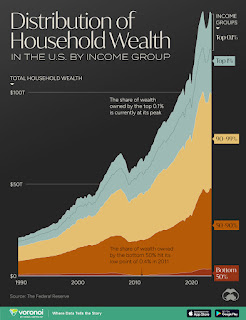
Maybe the system has been rigged after all

(For a counterpoint to the Stewart/Richardson discussion, here’s another Exeter alum with a different view)

Should Democrats Compromise?

Resistance implies that any compromise with the “fascists” in power is capitulation to evil.

But despite being in the minority, the opposition party is also part of the government and has an obligation to govern in the public interest. So, in addition to working on winning more votes in the next election and just trying to stymie Trump’s agenda (and the wishes of 76 million voters), they should be looking for opportunities to cooperate with the party in power whenever it could improve the lives of Americans or advance the national interest.

In the first Trump term Bernie opposed the USMCA (Trump's NAFTA renegotiation) but more House Democrats voted for it than Republicans and it did make some small changes that seemed likely to benefit American and Mexican workers and American dairy farmers. 

Other bipartisan legislation back then included reforms to the criminal justice system, addressing the opioid crisis, funding vocational training, reforming the Veterans administration, and granting aid to farmers.

(See “President Donald J. Trump Has Shown that Extraordinary Bipartisan Achievements Are Possible” at the UC Santa Barbara American Presidency Project.)

Trump may or may not have been sincere when he said: "When Republicans and Democrats talk, debate, and seek common ground, we can achieve breakthroughs that move our country forward and deliver for our citizens." But the fact that he said it shows he wants to be seen as open to bipartisan compromise.

Democrats must exit the campaigning mode and find issues where they can force him to honor this pledge. Trump’s party has a slim majority in the House and lacks a filibuster-proof Senate majority so Democrats will have some leverage between now and the midterms.

One promising area is labor. Trump selected a labor secretary backed the PRO Act, which would make union organizing easier, but half of Republicans oppose her. Democratic Senators will likely play a key role in her confirmation, but should also push the administration to follow her appointment through with concrete pro-labor policies. Democrats might also look for an area of compromise in Trump's appointment of a critic of the pharmaceutical industry to head HHS. 

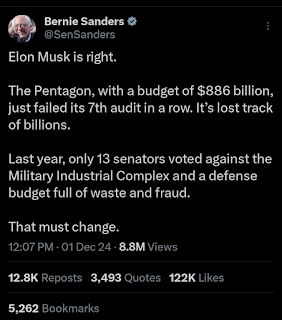
On Sunday, Sanders tweeted his support for Elon Musk’s plan to cut defense spending and Musk responded: “cool.” Another possible area of compromise? 

Roadblocks

I see two characteristics of the Democratic coalition that will make it hard for the party to effectively perform a normal opposition.

First, the party has come to be dominated by educated elites who are just so culturally different than the working class voters who have been trending rightward, that cognitive empathy may just be impossible.

Second, the liberal values of Democrats often come in conflict with any populist impulses they may have and pose a difficult dilemma. A passage from Alan Wolfe’s Future of Liberalism identifies this problem:

There are and always will be issues in which liberalism's commitments to openness, proper procedure, or fairness will come into conflict with democracy's insistence not only on fulfilling the will of the majority but on doing so as rapidly as possible…. For all their commitment to equality, liberals do believe that the political views people sometimes hold are not, if they had more knowledge and were open to more deliberation, the political views they should hold.

Wolfe uses the Supreme Court’s Brown school desegregation decision as an example of liberal values properly trumping majority opinion. But he also praised the Court’s deference to majority sentiments in the South with their “all deliberate speed” ruling and the slow pace of desegregation in practice. The Court

opted to give those people, and the political institutions that represented their views, sufficient time to grow into the position they ought to have rather than the one they did have. Ten years later, Congress passed the Civil Rights Act of 1964, giving the decision in Brown ex post facto democratic legitimacy. The lesson was clear: liberals could and should break with public sentiment in order to ensure that what was popular and what was right could become the same thing.

This comment echoes the great historian of Populism, Lawrence Goodwyn, who coined the term "ideological patience."  

Some parts of the Democratic coalition have been promoting views that may or may not be the views that Americans “ought to have,” notably in the past election promoting transgender rights.

Polling has shown that an ad ridiculing Harris’ support for funding of gender re-assignment surgery for prisoners played a key role in moving undecided voters to Trump. As Jonathan Chait has argued, Democrats can live up to liberal principles by defending the dignity and legal rights of transgender people without going along with every demand of the most radical gender activists, especially those involving minors.

This is a delicate line to walk, however, and I’m afraid the over-educated people who dominate the party and it's many factions (the "shadow party), won't manage to come together along that line with ideological patience for their fellow citizens.

Saturday, October 5, 2024

We should all LOVE politics

Last spring, I gave students in our Washington Internship Program an excerpt from Bernard Crick’s insightful book, In Defense of Politics. Crick defines politics as “that solution to the problem of order which chooses conciliation rather than violence and coercion, and chooses it as an effective way by which varying interests can discover that level of compromise best suited to their common interest in survival” (30). In diverse societies with conflicting interests, it is the alternative to authoritarian or totalitarian systems, which aim to eliminate or suppress interests that conflict with the interests of those in power. 

More simply put, it is government that relies on conciliation rather than coercion.

What I love about Crick's book is how he identifies “anti-politics,” behaviors and ideas that undermine conciliation, compromise and peaceful coexistence among diverse people.  We've got a lot of anti-politics in the US today.  

As I read the book I came to see anti-politics in "We are the 99%" populism of Occupy Wall Street; MAGA populism of Jan. 6; parents teaching their children to fear strangers; librarians who purge their collections of political views they oppose; schools and universities that don't train their students to talk to each other across difference and foster political mono cultures; media outlets that cater to their audiences' biases ("audience capture"); members of Congress who denigrate compromise; moralism, virtue signaling, cancel culture and other features of the culture war.

To elaborate on one example, cancel culture moralism is a form of anti-politics that is performed by well-intentioned progressives but makes progressive reform less likely to be achieved. Lisa Featherstone explained the problem well in the socialist periodical, Jacobin. The feminist argument that “the personal is political,” she writes, has been changed to “the political is personal.”

As an idea, “the personal is political” helped women to understand that an abusive boyfriend or a sex-pest boss was neither their own fault nor their problem to bear alone, but rather a political problem with political solutions. But the notion that the political is personal does the reverse. It takes our political impulse, or desire to analyze the world in political terms and change it, and turns it inward.

In a world where the political is personal, it becomes important to perform your essential political goodness. Put an “In This House, We Believe” sign on your lawn. Kick off that corporate board meeting with a land acknowledgement. These may sound harmless, but the corollary to all this individual goodness is the hunt for badness. When the political is personal, we must work to identify those individuals who embody everything that is politically bad—perhaps someone who has made a bad tweet—and punish them as such (Winter 2022, p. 94).

I asked my students to reflect on how Crick’s conceptions of politics and anti-politics informed their work in congressional offices and/or their understanding of current events.

Leo, who follows European politics more closely than most Americans connected Crick’s ideas to Giorgia Meloni, Italy’s right-wing prime minister.

When looking at her example, it's easier to see the value of an adept politician and the folly of following an “outsider” like Trump or Obama. Neither were able to build consensus, indeed both of them created deep divisions within the country. Obama with the “Obama Coalition” and the rise of identity politics, and Trump with his harsh rhetoric. Neither was able to achieve any major bipartisan accomplishment. In fact, Joe Biden is arguably the first President since Clinton to pass a major bipartisan piece of legislation. Senator [Thom] Tillis [R, NC], for instance, was an important backer of the Infrastructure Investment and Jobs Acts.

Brenda connected her experience on the Hill to Crick’s writings and another piece we’d read, about 1990s House Speaker Newt Gingrich, “The Man Who Broke Politics.” Among other changes, Gingrich shortened the House work week to just three days:

It’s necessary not just for politicians but for voters to engage in discussions across the aisle, no matter how much our instinct tells us we hate the other party.

Now, politicians are flying back to their district on a Thursday afternoon, with no incentive to talk to lawmakers on the other side. Thus, we've seen intense polarization that limits bipartisanship and the work of Congress. We begin to believe all Democrats are lazy and dishonest, and that all Republicans are close-minded.

Clara saw first hand how compromise is essential in governing. Her comment reflects the experience of many of my interns who tend to arrive in DC with more of a campaigning mindset but leave with an appreciation for the importance of deliberation, conciliation and compromise in governing.

Rep. [Salud] Carbajal [D-CA] is more of a moderate Democrat than I had hoped to work for way back in November. Yet I’ve found that interning for him has opened my mind to more viewpoints and the value of compromise than ever before. The office keeps track of whether the bills he cosponsors are bipartisan, a number now hovering at 64%. I found myself feeling proud when that number rises. In the least productive Congress of all time, it is of the utmost importance to make concessions within each bill. Is it worse to pass an imperfect bill, or nothing at all?

Clara may have had in mind the very weak Civil Rights Act of 1957, which she’d read about in Robert Caro’s book, Master of the Senate. Senate majority leader Lyndon Johnson agreed to so many compromises to get it past the segregationist Southern senators that many liberal supporters of Civil Rights were inclined to vote against it. Johnson, according to Caro, won the liberals over by arguing that if they passed “one civil rights bill, no matter how weak … others would follow.” Also, “Once a bill was passed it could be amended: altering something was a lot easier than creating it” (893).

Perhaps Johnson was thinking of the Social Security Act of 1935, which excluded agricultural and domestic workers, thus excluding 65 percent of Black workers in deference to the Southern segregationist bloc. By 1957 the act had been amended six times with more to follow, and the 1950 amendment extended coverage to farm and domestic workers.

Tuesday, September 17, 2024

In defense of MAGA voters

The neighbors' place.

The people I mostly interact with are adamantly anti-Trump.  Well, so am I. After Joe Biden's disastrous debate performance, I started saying I'd vote for a ham sandwich before I'd vote for Trump in November.  Thankfully the Democrats came up with a better option than ham for the next president. 

How, my friends, family and colleagues at work, often wonder, could ANYONE vote for someone so horrible?  How can they believe his lies? How can they excuse his glaring character flaws? How can they think he cares about their interests?

We don't find an explanation in the media we consume.  Sometimes I find myself scrolling liberal YouTube or other social media, watching clips from various man-on-the-street interviews of the Trump voter done by slick late-night comedians, or random You Tubers with a camera and a microphone.  They give preposterous answers to questions about current events, public policy or history. They spout absurdly implausible conspiracy theories.  They offer elaborate, logic-defying explanations for Trump's lies, exaggerations and foibles. It's quite satisfying. It makes me feel so smart.

Those of us marinating in these presentations without any alternative sources of information about these fellow citizens of ours, conclude that MAGA world is made up of the least intelligent, least educated, least rational, most racist, sexist, xenophobic, gullible people among us. Those who have tried to enlighten them out of their MAGA delusions generally conclude that they are impervious to facts and reason. 

I recall a moment of shock and humility among the the people around me after Trump's victory in 2016, and some folks were saying that it was time to start listening to some of the voters outside of our own blue bubble and understand the source of their discontent.  

I was in a book group at the time and suggested that we read Arlie Hochschild's book, Strangers in their Own Land, a five-year study of conservative working class Louisianans who were reliable voters for a Republican Party that opposed environmental regulations that curbed oil company practices that were causing catastrophic destruction of their homes and communities, creating among other things, a "cancer ally" and home-swallowing sink holes. 

I think Hochschild's aim was to create empathy and understanding of these voters in the hopes of opening up dialogues and eroding the alienation and polarization that has made it increasingly difficult for people with opposing views to hash out compromises—or to even see the opposition as legitimate.  The book didn't seem to have that effect on most of my fellow book-readers, but to confirm their negative assumptions and bafflement. 

The book had a different effect on me, I guess, because I'd spend the summer of 2016, after the Brexit vote, and Trump's primary victory, trying to understand what was going on with those voters as I was preparing to teach my fall course on American Politics and Public Policy. I also happened to be writing a meditation on the subject to be delivered at the start of the term.

Since then I've kept seeking out explanations for the Trump voters and I think there's more than what we see on late night comedy. Here's a list: 

1. Support for Trump is based in both rational and irrational thinking, solid facts and delusions.  That's true of lots of thinking here in Blue America, too.  I include a segment in my politics class about the cognitive distortions that cloud everyone's thinking, especially when it comes to politics.

2. Trump voters are a varied bunch, like Blue voters, they don't all agree with each other. They range from rabidly angry anti-democratic hooligans who see Trump as divinely inspired, to average middle class voters who only reluctantly pull the MAGA lever, more out of opposition to the Democratic policies than love of Trump. Similarly, Democratic voters include some people with views I'd rather not have to align myself with.

3. Trump emerged from a rising populist sentiment in the 2010s that was justifiably revolting against  what Thomas Frank calls "elite failure"—de-industrialization, hollowing out of the middle class, forever wars, the opioid epidemic, the Great Recession, uncontrolled immigration, the catastrophic decline of private-sector unions, corporate money in politics. But after Trump captured the Republican Party, the Democratic establishment put its finger on the nomination scale to make sure the left populist lost to Clinton, who had become a symbol of elite rule.  Pre-convention polls suggested Sanders would have done better than Clinton in the general election. So we got right- instead of left-wing populism. 

Whatever. The point of this, is to share a few things I've read recently in the off-chance you might want to have a more nuanced understanding of the Trump voter.  

  • NYT columnist Ross Douthat is not a Trump supporter, but he is a conservative who has no trouble coming up with justifiable reasons to vote for Trump again, for example in a Sept. 14, 2024 piece, "What Undecided Voters Might Be Thinking."
  • This podcast, Batya Ungar-Sargon, a 2016 Sanders supporter explaining why Harris's debate performance might not have won working class Trump voters. 
  • Thomas Frank does a good job of explaning the populist revolt against the Democratic Party in his books Listen Liberal and The People, No.  
  • The writings of John Judis and Ruy Tuxiera blame the Democratic Party for losing voters more than the blame the irrationality of Trump voters.  For example, their last collaboration, Where Have all the Democrats Gone, Tuxiera's Substack blog, "Liberal Patriot," and Judis's primers on populism and nationalism combined along with a book on socialism in "The Politics of our Time."
  • Kaitlyn Flannigan's Atlantic article, "How Late Night Comedy Feuled the Rise of Trump," argues that our gleeful riducule of Trump voters probably cements their support of him.
Last but best, the organization Braver Angels has had great success in bringing voters from the opposing sides together to at least listen to each other and sometimes even find common ground. I witnessed this in person at their annual convention in Kenosha Wisconsin this past June.